
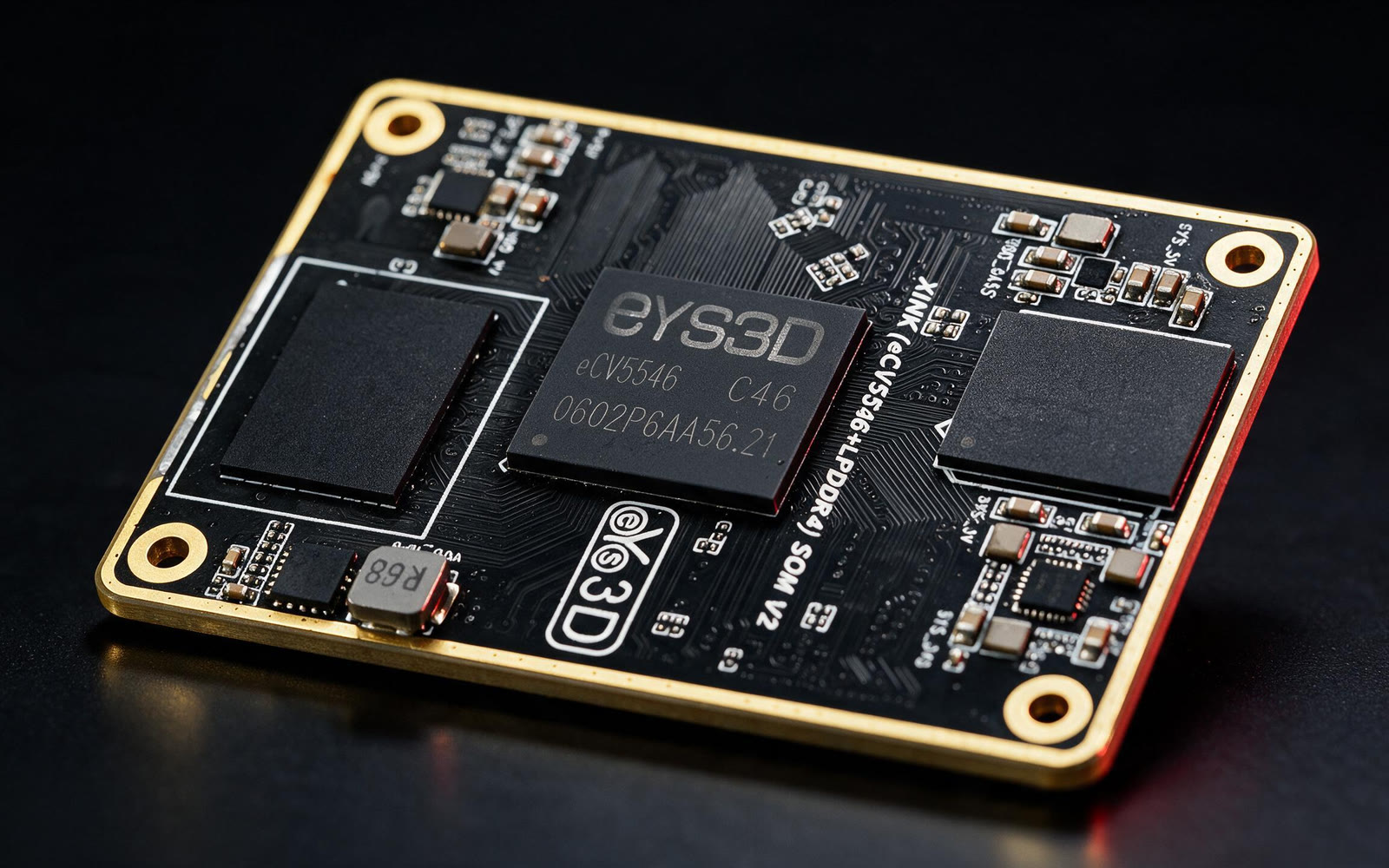
XINK SOM
The drop-in robot brain
- Compute
- eCV SoC — quad A55 @ 1.8 GHz + M4
- NPU
- 4.1 TOPS (@900 MHz)
- Memory
- 4 GB LPDDR4 · 32 GB eMMC
- Video
- H.264 / JPEG codec
- Size
- 40 × 55 mm
reason
The reasoning core of Physical AI.
XINK CORE enables edge devices and robots to understand context, reason locally, and generate intelligent actions without relying fully on cloud AI — from the eCV AI SoC shipping today to a dedicated LLM processor on the roadmap.
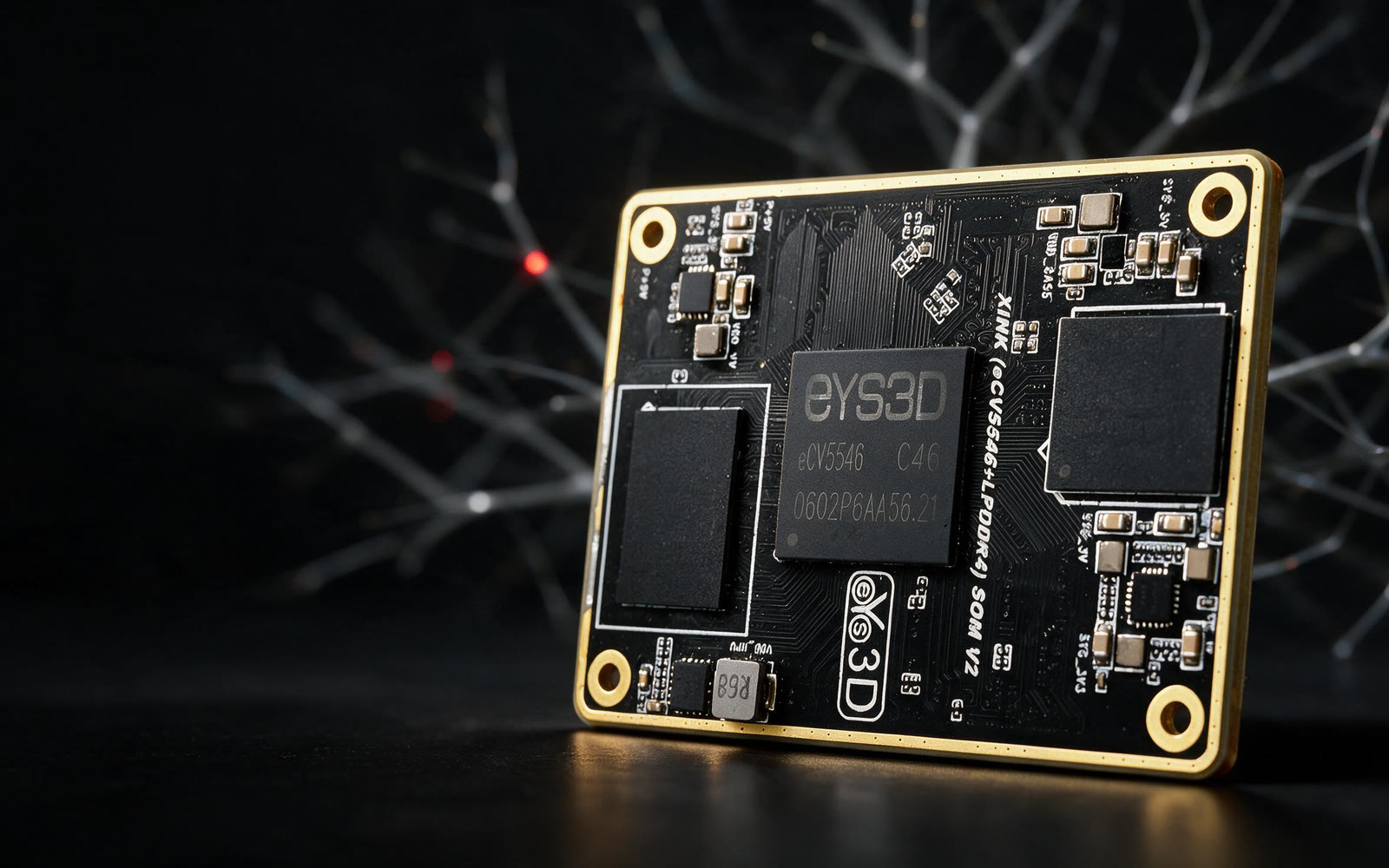
Server-class AI capability in space- and power-efficient modules — drop in the core board, or start from a full development kit.
The drop-in robot brain
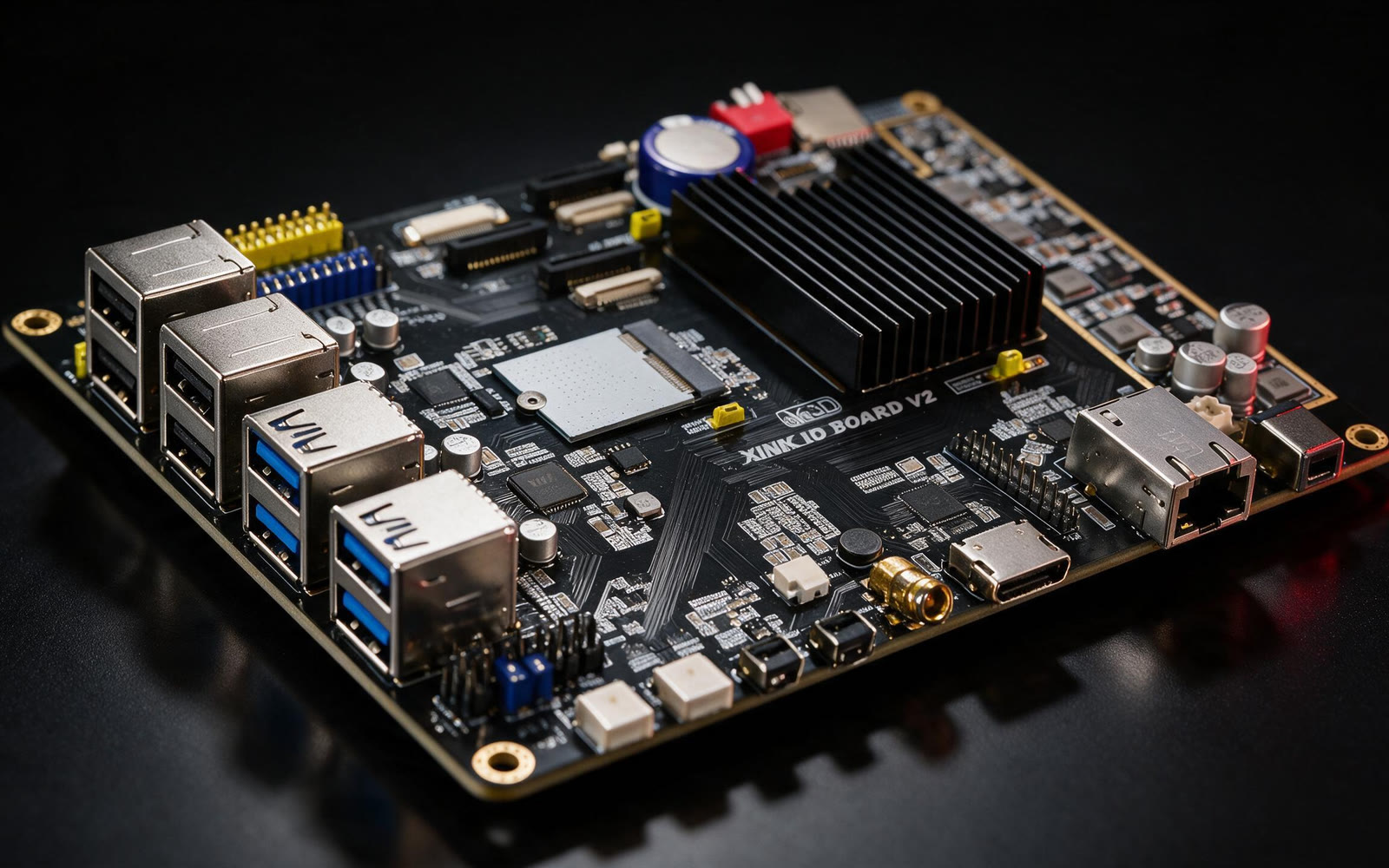
Full-I/O development kit
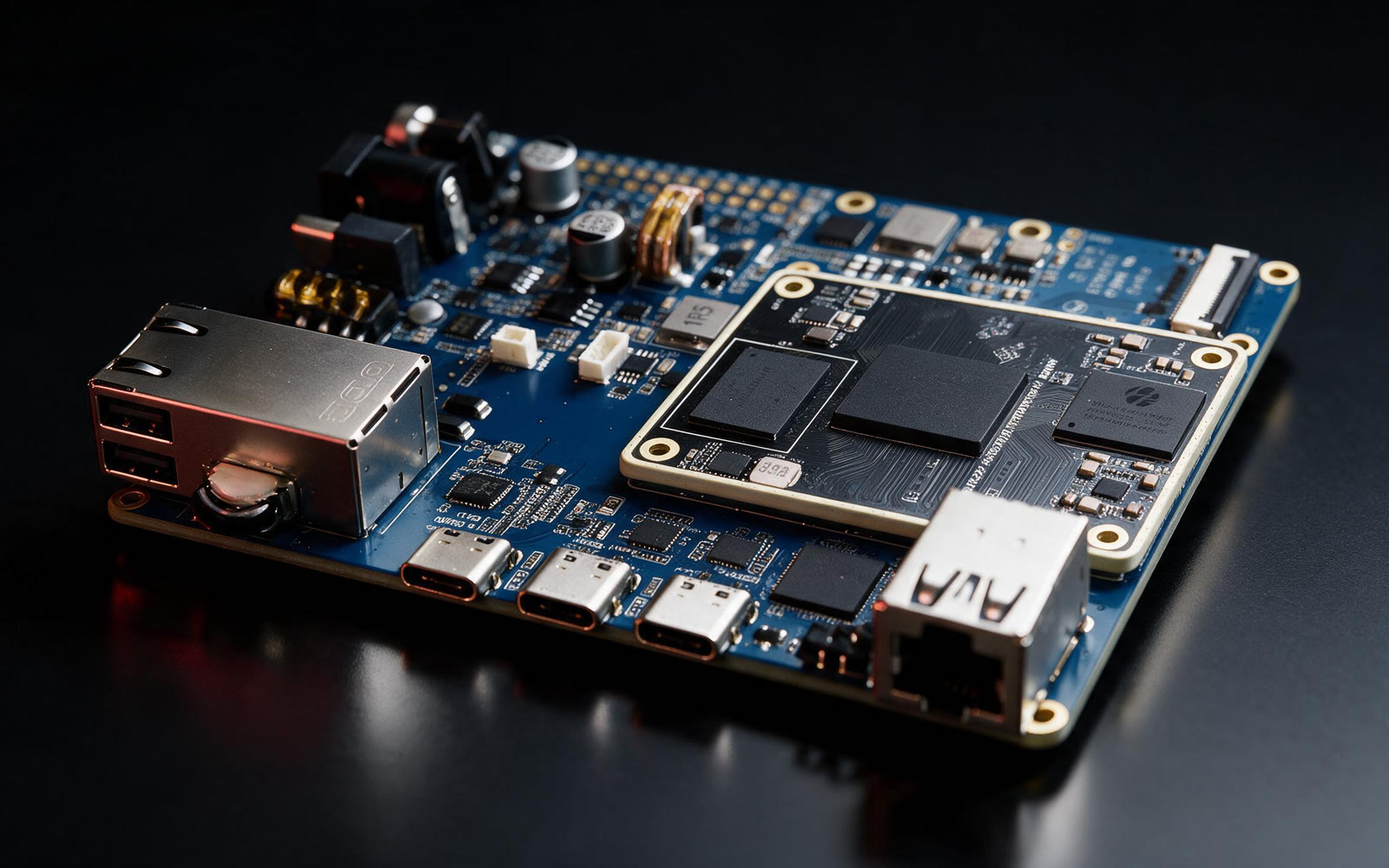
Compact sensor-fusion platform
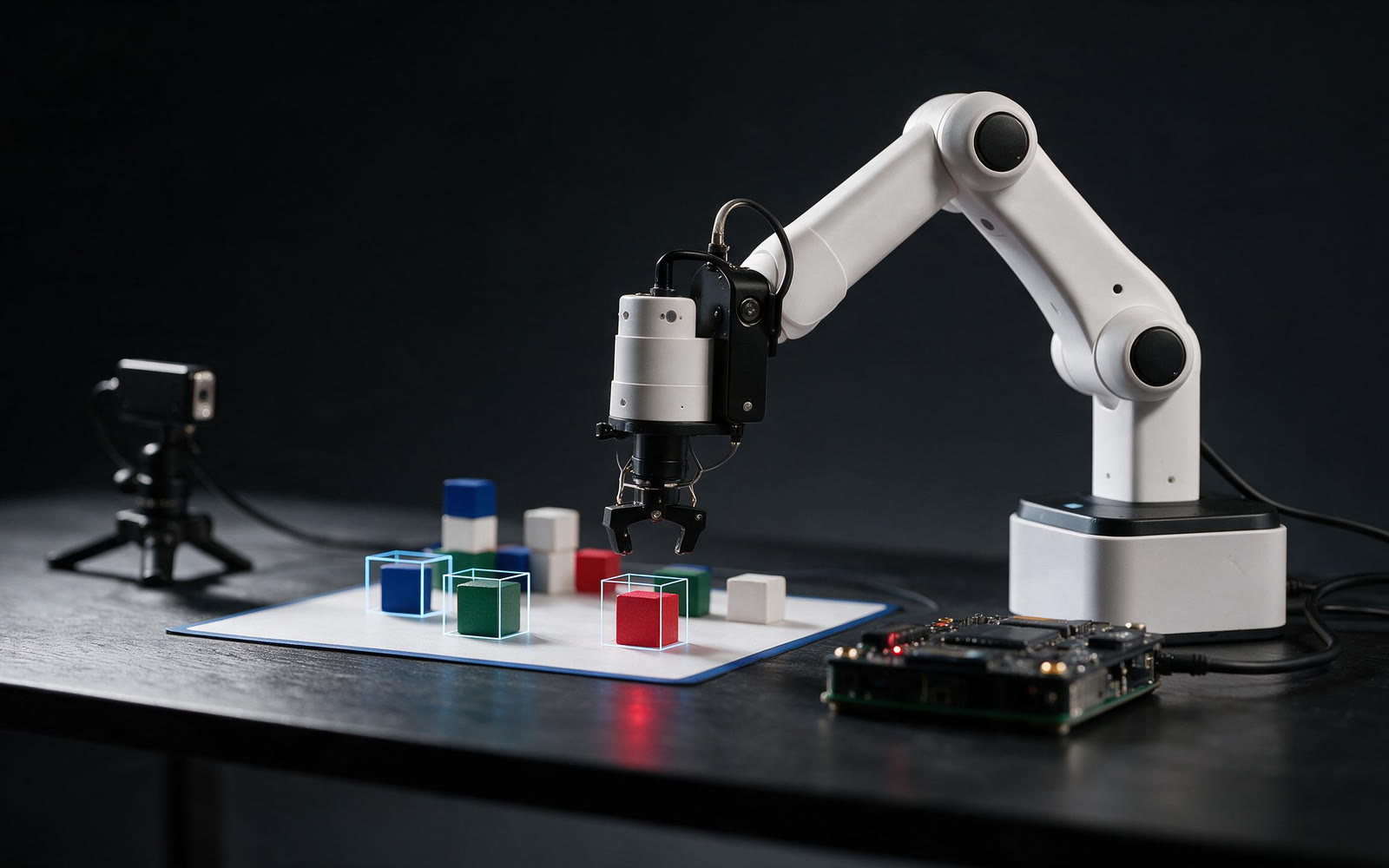
Edge LLM / VLM models run where the data is captured — private, low-latency inference that keeps working when the network doesn't. In live demos, a quantized Gemma 3 model on a XINK board understands natural-language commands, plans multi-step tasks, and drives a robot arm.
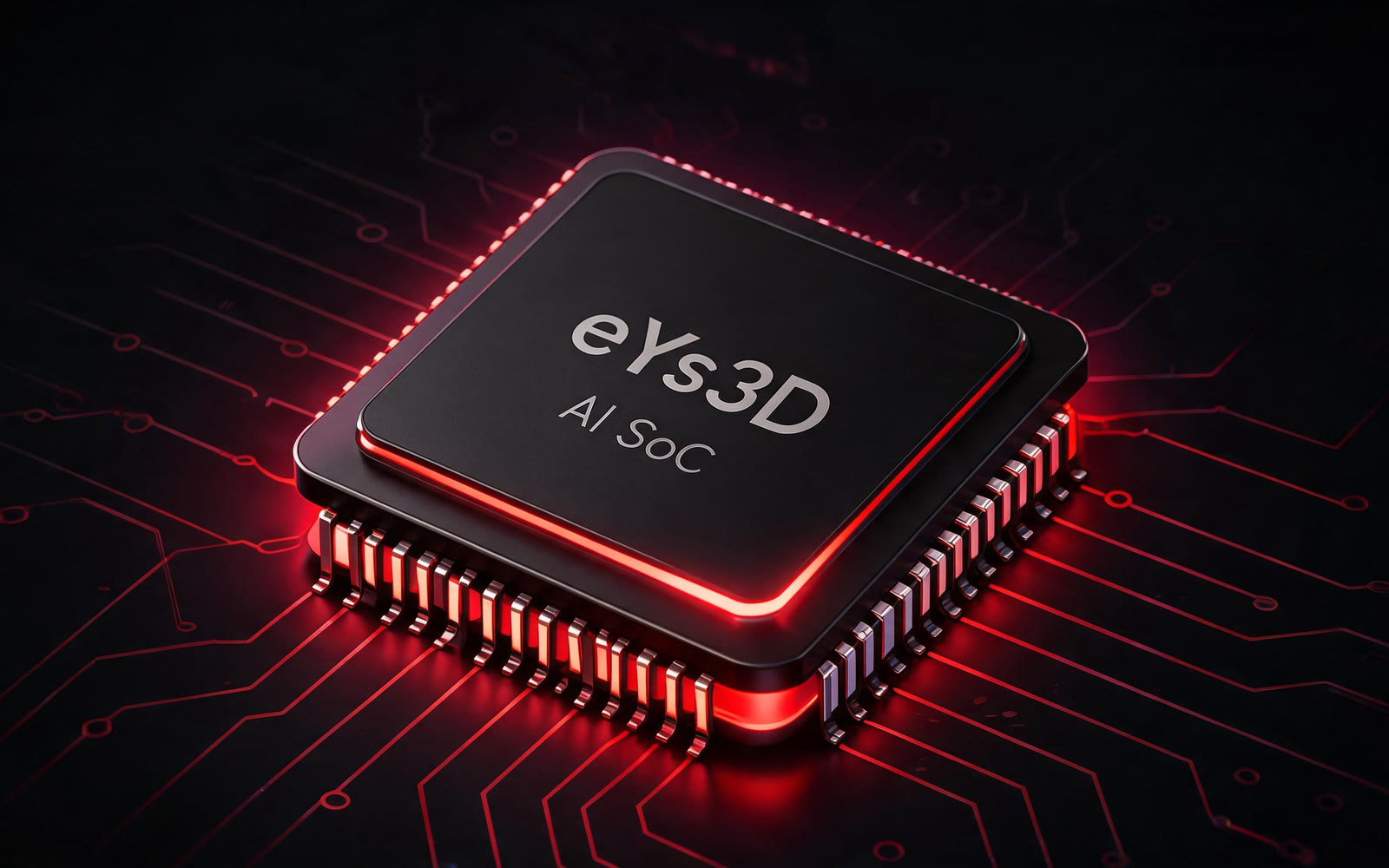
At the center is the eCV AI SoC: a quad-core Arm Cortex-A55 for applications, an always-on Cortex-M4 for real-time control, and an NPU delivering up to 4.6 TOPS — with MIPI, USB 3.0, and Ethernet interfaces that fuse RGB, ToF, IMU, LiDAR, and thermal sensors on one chip.
eYs3D is taping out a next-generation 28 nm LLM IC targeting efficient low-context inference — prefill and decode tuned for the edge. It completes the Sense-and-React architecture: perception and cognition operating as a single, unified edge reflex.
CORE models are versioned, converted, and shipped to devices through the platform's Model Zoo — from base model to fleet rollout in one pipeline.

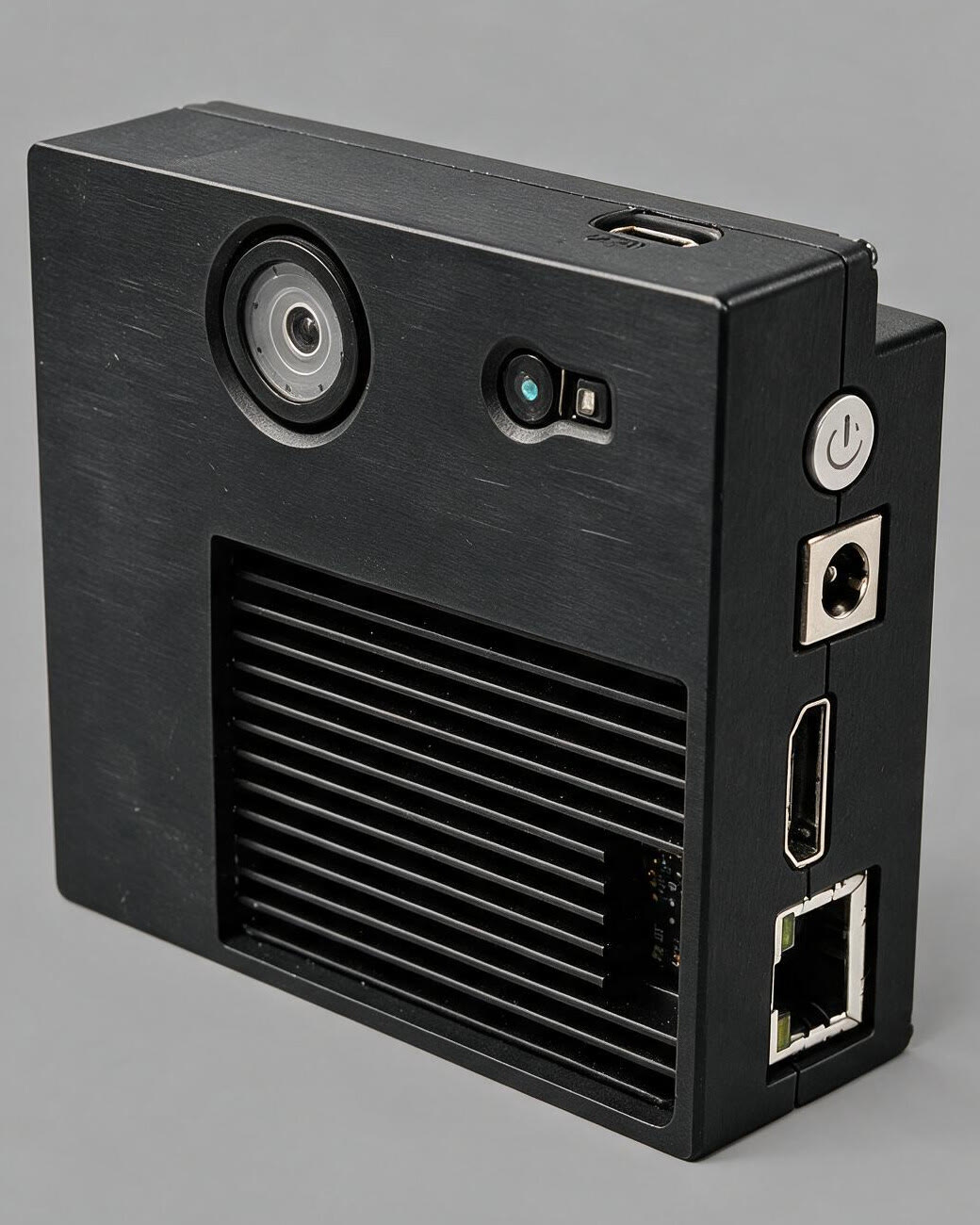
| OS | ARM64 Ubuntu Mate 20.04 |
|---|---|
| RGB sensor | STMicro VD66GY · 1124 × 1364 |
| RGB module | eSP776 ISP · up to 1120 × 1120 YUY2 · 100° / 57° FoV |
| RGB lens | NewMax DS-69017 (eYs3D IP) |
| ToF sensor | STMicro VD55H1 · raw 672 × 2420 @ 30 fps |
| ToF depth | 84 × 100 point cloud @ 15 fps · H63.8 × V55.1 · <3 W |
| Storage | microSD · eMMC |
| I/O | 2× 1c4d MIPI in · USB 3.0 Type-C · USB 2.0 Type-A · GbE · M.2 Wi-Fi · HDMI |
| GPIO | 12× GPIO — 2× I²C · 1× SPI · 2× PWM |
| Audio | Built-in mic · speaker header · 3.5 mm jack |
| Power | 12 V DC jack or 5 V USB-C · out 12 / 5 / 3.3 V |
| Size | Box 75 × 80 × 30 mm · PCBA 75 × 60 mm |
Every CORE model is managed fleet-wide: versioned in the Model Zoo, installed over the air, monitored from the dashboard.
XINK CONNECT